
Build a forecast that fits your business. Keep the flexibility you rely on in spreadsheets, with less upkeep and more control over the details that matter.








Forecast Beyond the Books
Include what you know is coming and adjust as circumstances change.
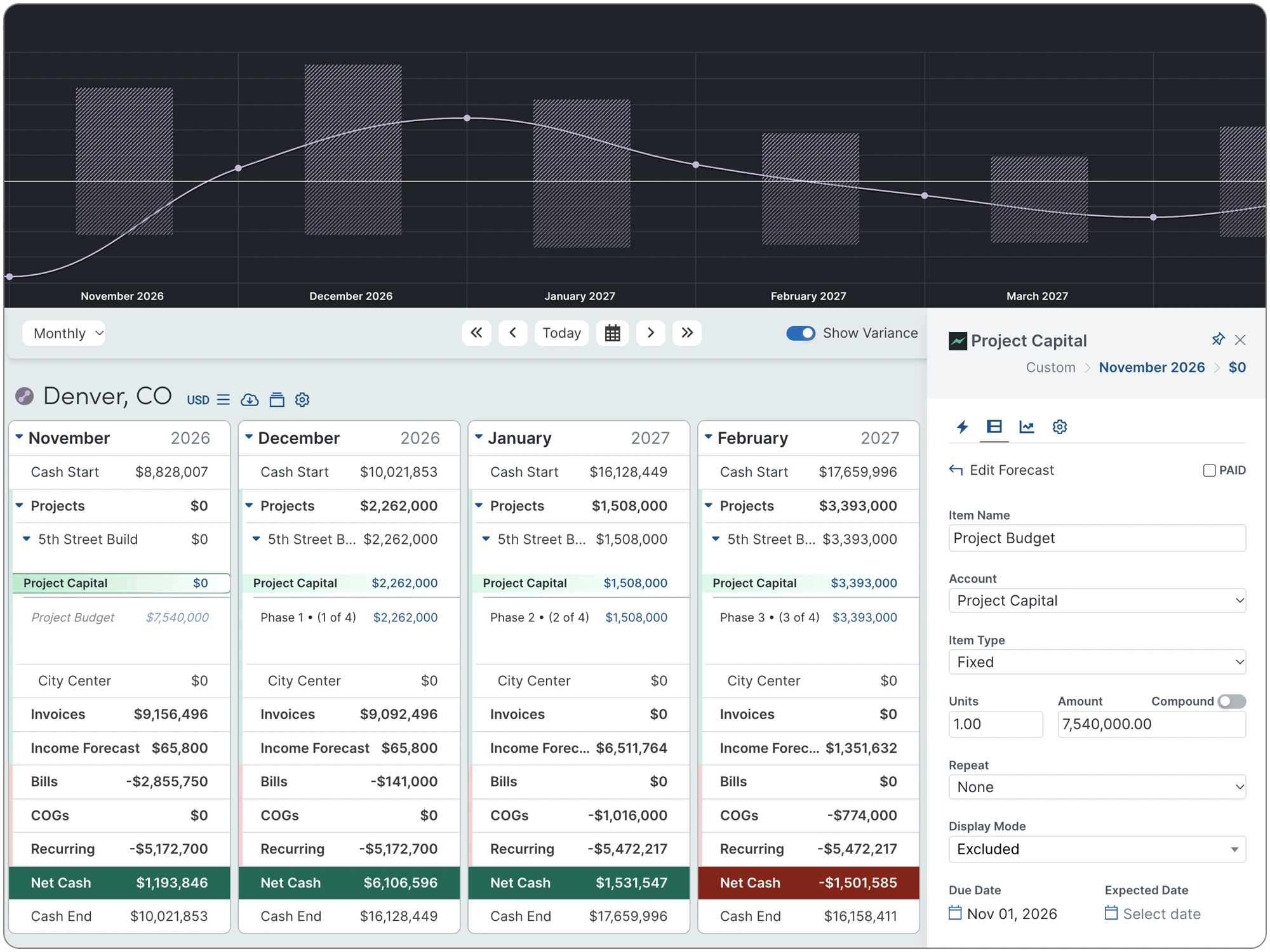
Accounting records are a starting point for your cash forecast. Dryrun lets you add future commitments and revise expected payments so the outlook reflects your business knowledge alongside the numbers.
- Add What the Books Don’t Show: Include planned purchases, upcoming projects, financing, or other expected cash movements. Account for important activity before an invoice or bill exists.
- Adjust the Details That Matter: Change dates and amounts, add forecast items, or remove items that no longer apply. Reflect new information without rebuilding formulas or working around a fixed template.
- Keep Your Accounting Records Intact: Make adjustments within your forecast without changing the original records in your accounting system. Explore expectations and possibilities while keeping recorded activity separate.
Automate with Control
Save time on routine forecasting while keeping control of the assumptions.
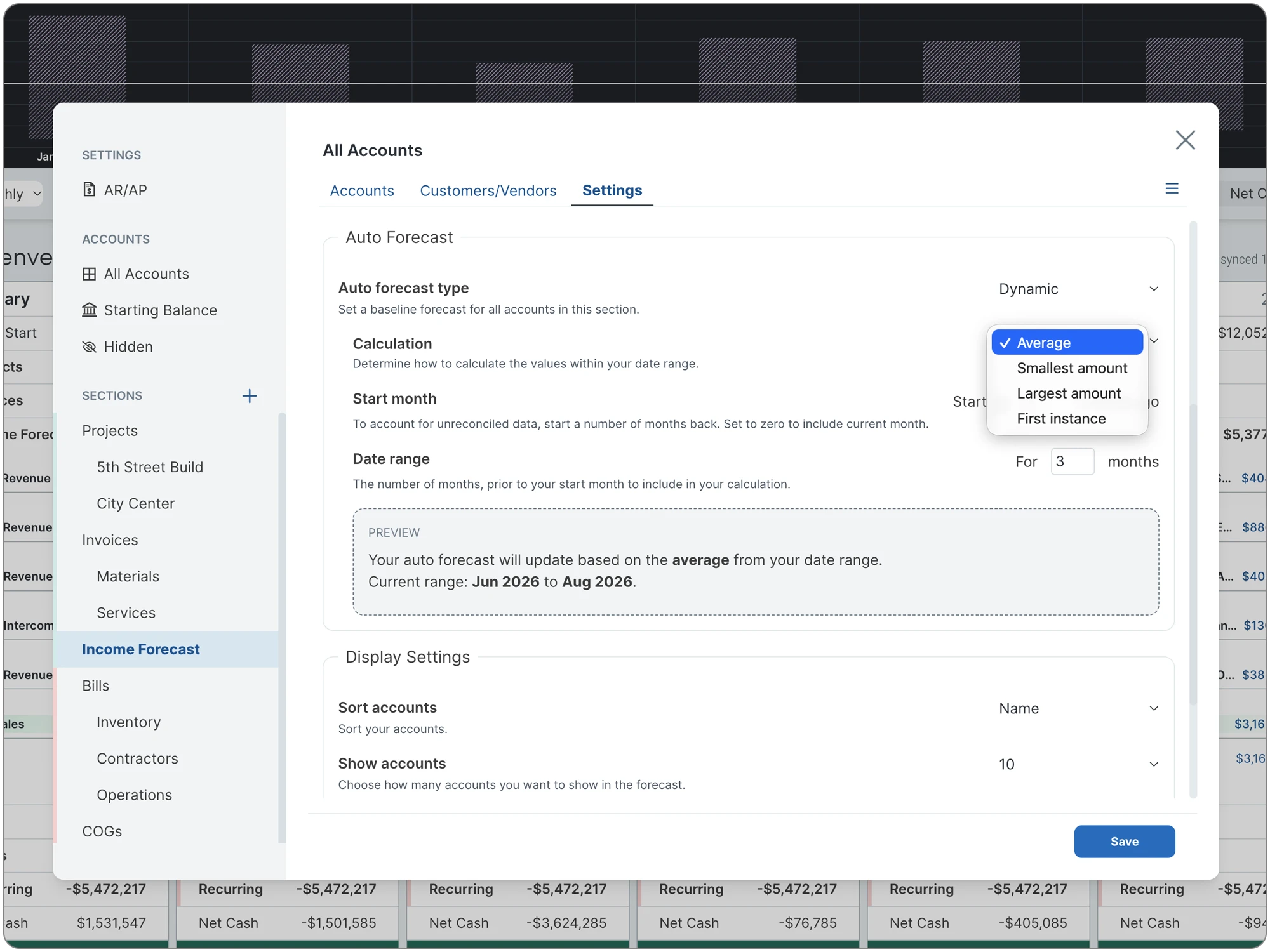
Automation is most useful when you can adapt it to what you know. Dryrun can auto forecast based on the past, while leaving you in full control to adjust on the fly.
- Refine Customer and Vendor Timing: Use automatically calculated days outstanding as a starting point, then adjust payment assumptions for individual customers and vendors when you have more current information.
- Shape Your Auto Forecast: Use recent payment history to project upcoming activity, especially repeating expenses. Adjust Auto Forecast settings and account filters to focus on the activity you want to include.
- Handle Exceptions Directly: Revise a predicted amount or date when a contract changes, a cost increases, or a payment commitment is confirmed. Let automation reduce routine work while your judgment shapes the outlook.
Organize for Clarity
Give your team a structure that makes the numbers easier to use and explain.
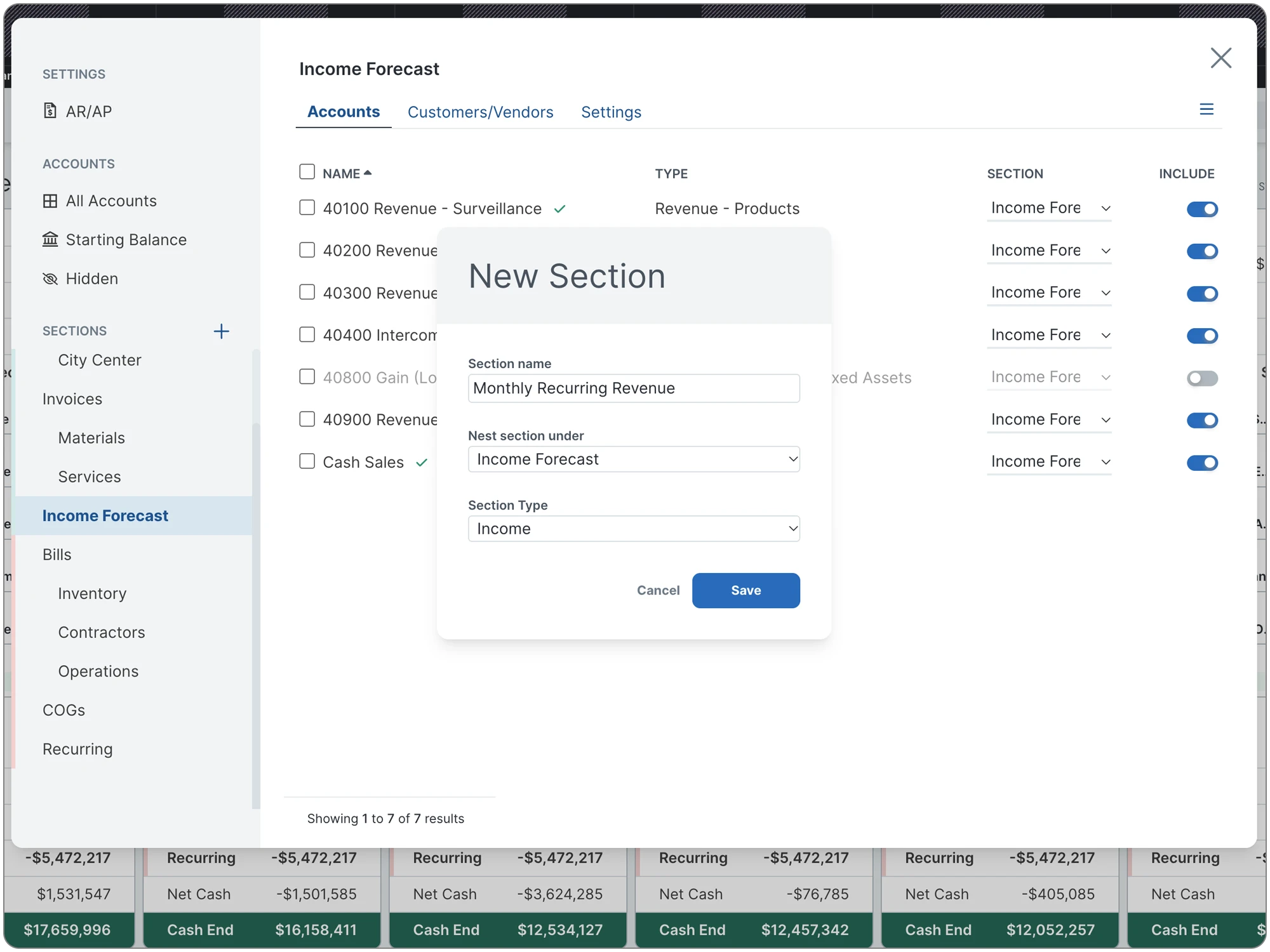
Your forecast should reflect how you manage the business. Dryrun lets you organize accounts, tailor scenario views, and choose the level of detail needed for everyday analysis and leadership discussions.
- Use Meaningful Accounts and Categories: Create custom sections, sub-sections, accounts, and items. Edit names to match the way your team plans and reviews cash. Keep important activity easy to find and understand.
- Choose What Each Scenario Includes: Filter accounts for individual scenarios to focus on the activity relevant to a particular plan. Build a useful view without creating another workbook.
- Move Between Detail and Overview: Review individual items when you need to investigate a number, then bring the view back to broader totals. Help colleagues understand the outlook without losing access to the detail behind it.

Cash Forecasting with Control


