
Explore your options before you act. Test cash flow decisions, plan for growth, and give leadership clear answers without rebuilding spreadsheets.








Take Control of Near-Term Cash
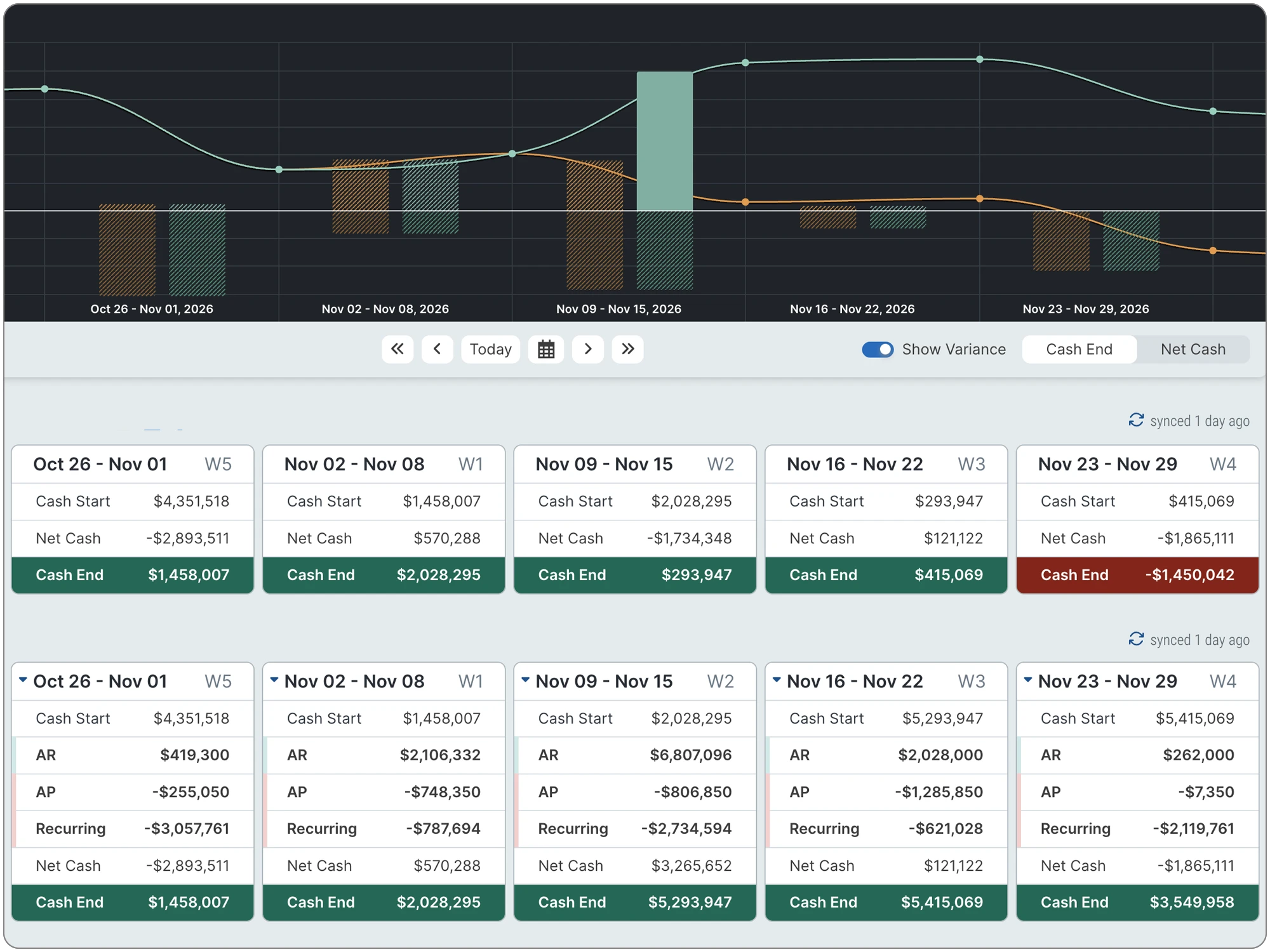
Test how changes could affect upcoming payments—and what you can do about them.
Dryrun helps CFOs and controllers stress test operational cash flow. Explore delayed collections, unexpected expenses, or changing payment dates, then compare practical ways to keep the business funded.
- Test Your Cash Forecast: Copy your working scenario and adjust expected receipts or payments. See whether a late customer payment or added expense could leave you short for payroll, suppliers, or other commitments.
- Evaluate Your Next Move: Compare revised payment schedules, earlier collections, or short-term financing. Understand how each option affects projected balances so you can decide which actions to pursue.
- Plan Where Cash Is Needed: Model transfers between accounts or entities to explore how available cash could cover upcoming needs. Check the effect on both sides before deciding when and where to move funds.
Plan for Growth
Understand the cash needed to turn opportunities into achievable plans.
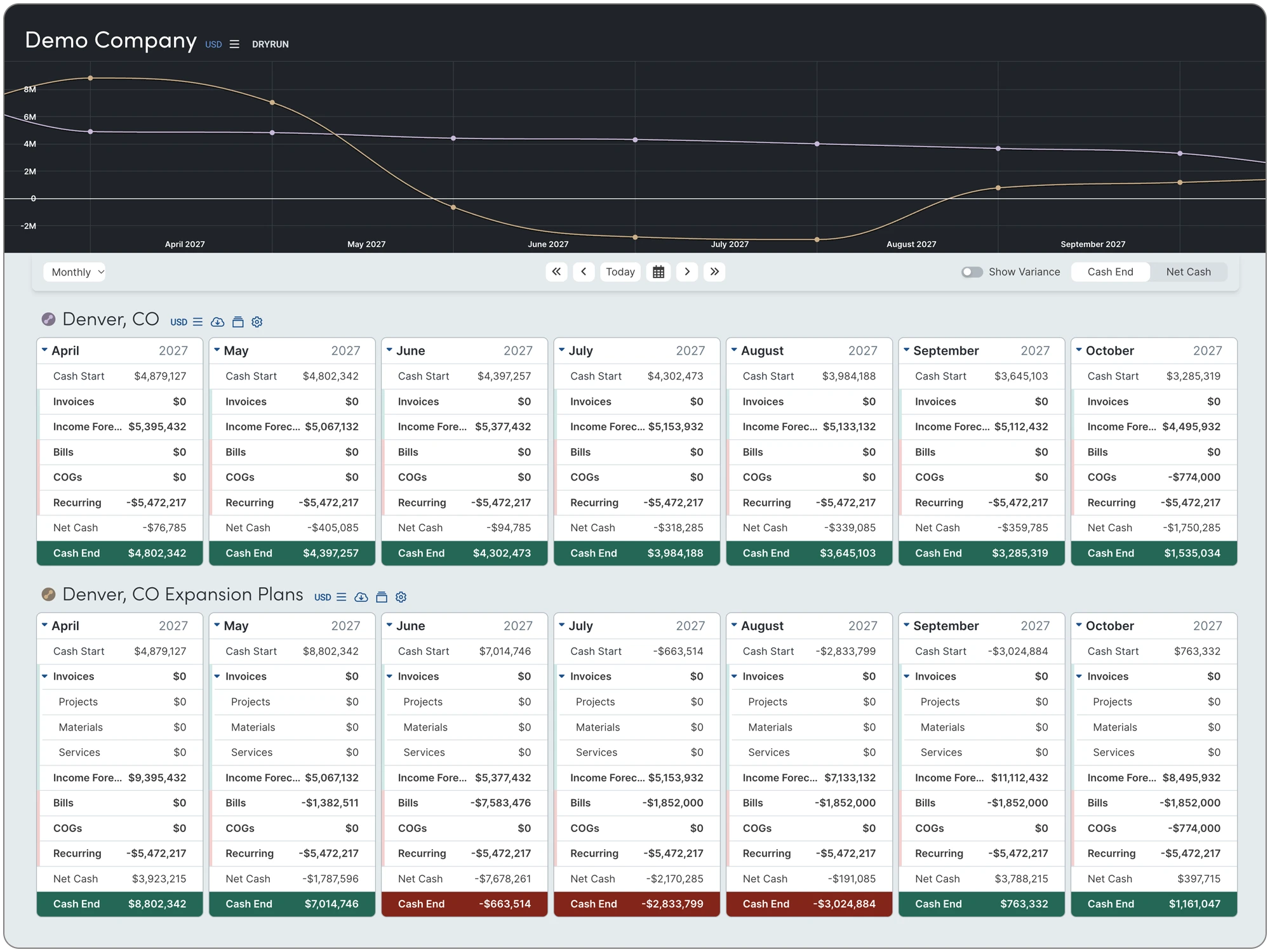
Dryrun gives finance teams room to explore longer-term strategy alongside everyday cash requirements. Model the costs, expected receipts, and timing of new opportunities to understand how the business could support them.
- Explore New Opportunities: Model additional hires, equipment purchases, new locations, or potential projects. Include future activity that has not reached your accounting records to build a fuller picture of each plan.
- Understand Funding Needs: See when investment costs arrive and when the expected cash follows. Identify how much funding a plan may require and how long the business may need that support.
- Compare Paths to Growth: Test different start dates, spending levels, or phases of expansion. Explore a range of sales expectations to find an approach that balances opportunity with the cash available.
Present Clear Options
Show management the choices—and explore their questions together.
Turn detailed forecasts into a clear visual discussion. Dryrun helps you explain how different plans affect future cash, support your recommendation, and model new ideas while the conversation is happening.
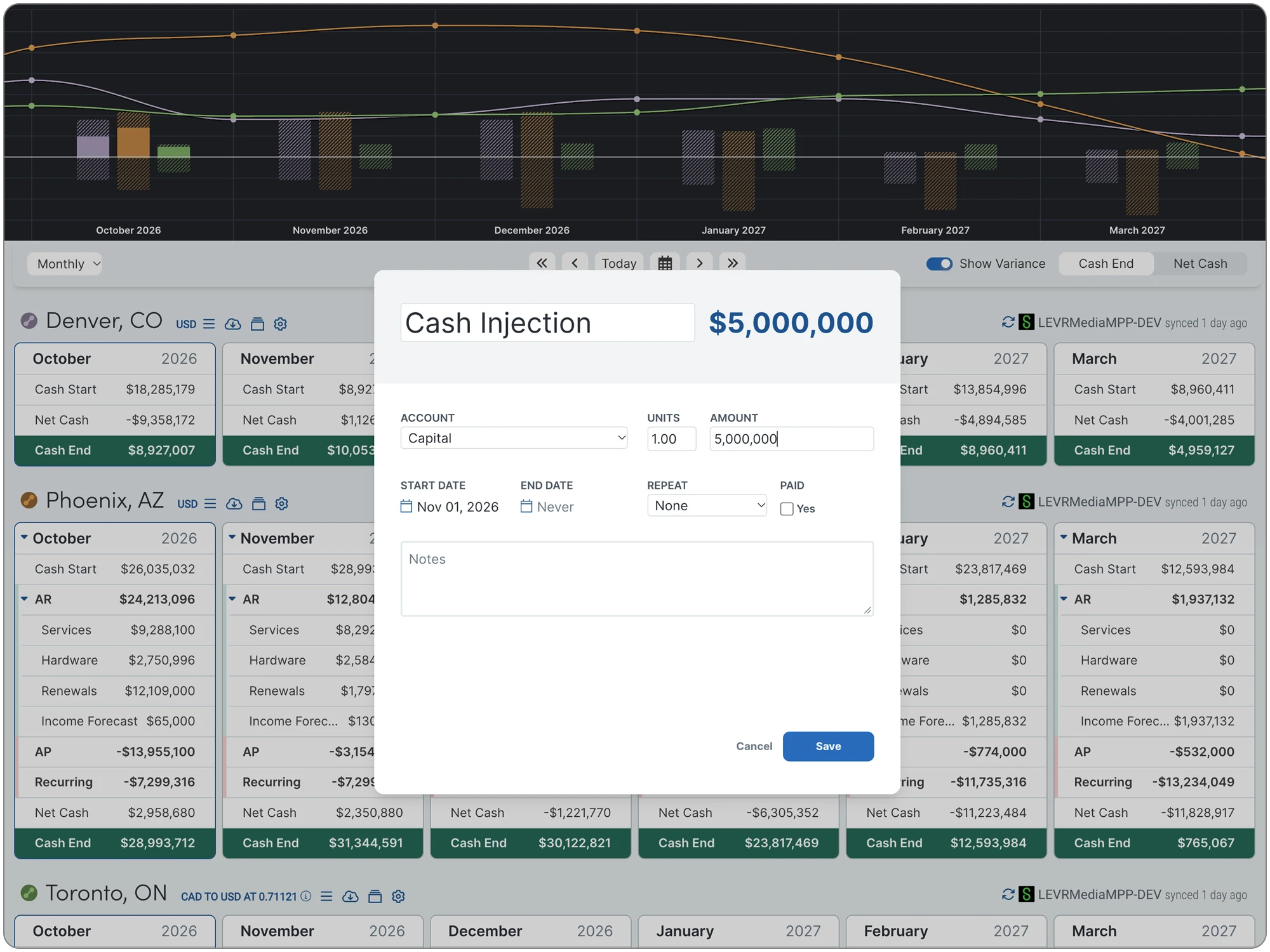
- Present Scenarios Visually: Show your current forecast alongside alternative plans in one chart. Make differences in cash balances, timing, and funding needs easy for the CEO, board, or owners to understand.
- Show What Drives the Result: Start with the overall outlook, then review the receipts, payments, and assumptions behind a significant change. Give management the context to weigh the options and understand your recommendation.
- Model Changes on the Fly: Adjust dates, amounts, or assumptions during the meeting. Answer questions such as “Could we hire sooner?” or “What if we phased the investment?” and review the effect together.

Scenario Planning Software


